world
Niflheimr
The cold, misty world of the north in Snorri's creation story, source of the rivers and later Hel's realm; the poems know only Niflhel, a deep region of the dead.
Niflheimr, "mist-world", is the cold pole of Snorri's cosmos. The name itself is found only in his prose. The poems speak instead of Niflhel, "misty Hel", a deep place of the dead.
In the creation story
Snorri begins before the earth. "Many ages before the earth was shaped", he writes, the Mist-World was made, with the well Hvergelmir at its centre, from which spring rivers named Svöl, Gunnthrá, Fjörm and others; the last of them, Gjöll, flows "hard by Hel-gates" Gylfaginning 4. To the south lies the burning world of Múspell. Between them is Ginnungagap. The rivers from the north freeze into layers of rime, sparks blow in from the south, and where the two meet the ice drips and comes to life as the giant Ymir Gylfaginning 5. "Just as cold arose out of Niflheim, and all terrible things", Snorri says, so heat came from Múspellheim Gylfaginning 5.
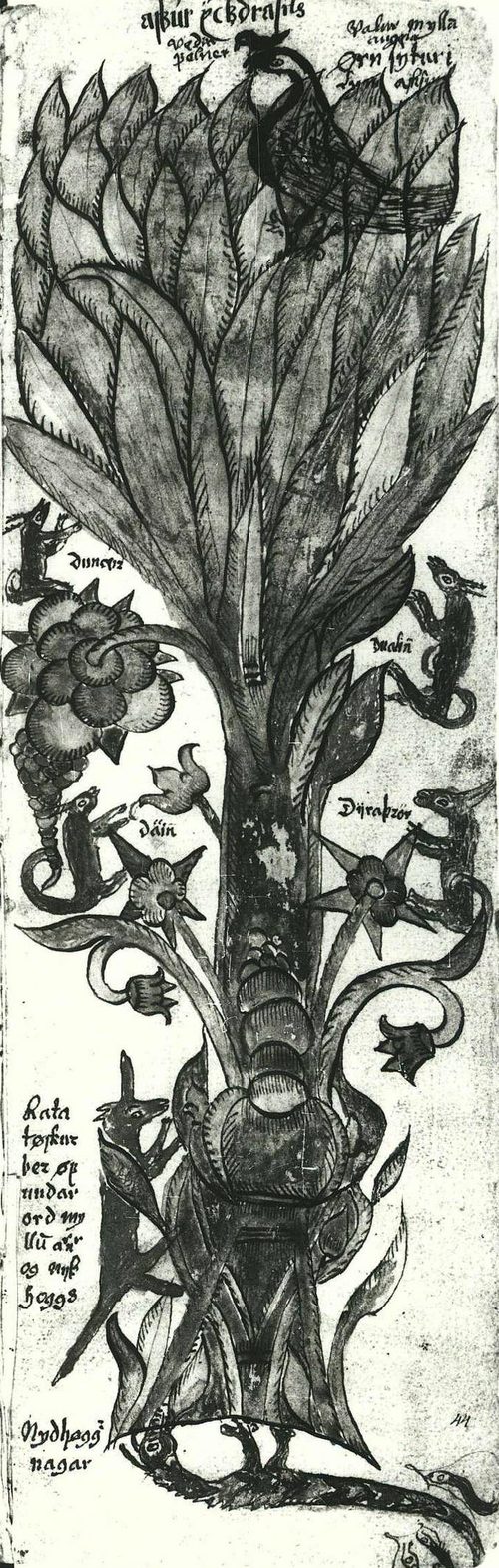
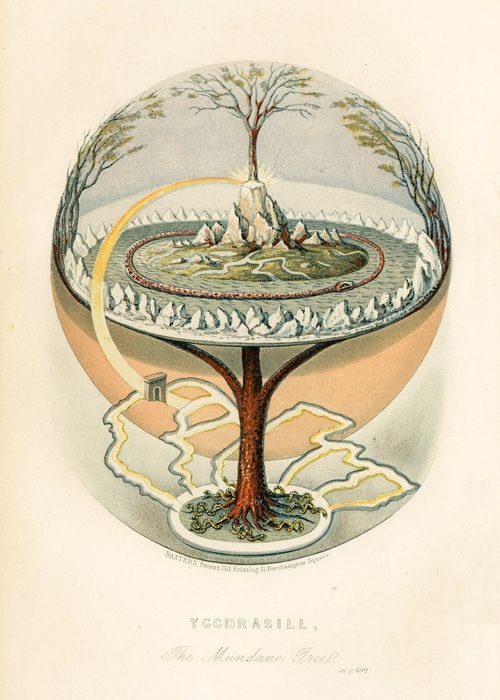
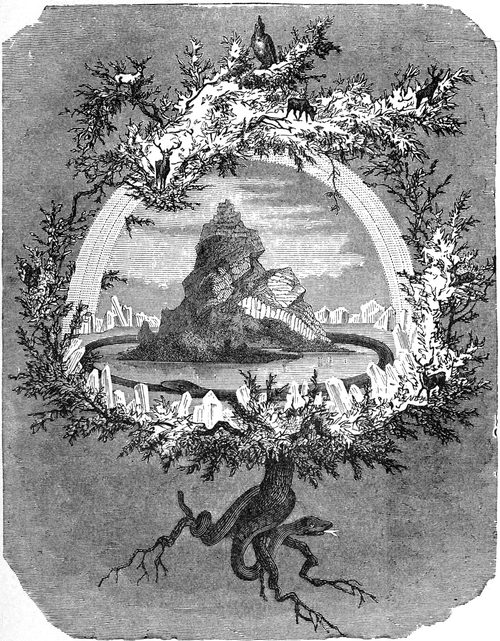
Snorri also places Niflheim under the tree: one root of Yggdrasill stands over it, with Hvergelmir beneath and Níðhöggr gnawing from below Gylfaginning 15.
As the realm of the dead
Later Niflheim becomes the land of the dead. Odin casts Hel "into Niflheim, and gave to her power over nine worlds", to receive those who die of sickness or old age Gylfaginning 34. Snorri also says the wicked go "to Hel and thence down to the Misty Hel", which is "down in the ninth world" Gylfaginning 3, and Thor's blow sends the giant builder "down below under Niflhel" Gylfaginning 42.
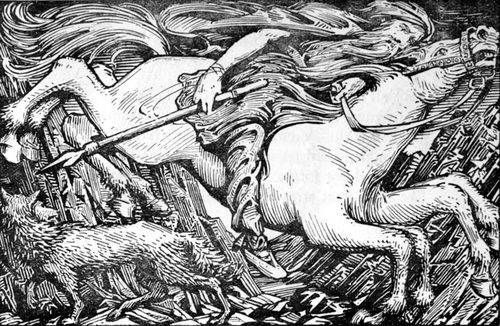
The poems use only this second sense. Odin rides "down to Niflhel deep" in Baldrs draumar and meets a hound "that came from hell" Baldrs draumar 2; Vafþrúðnir has visited nine worlds and "Niflhel beneath, / The home where dead men dwell" Vafþrúðnismál 43. No poem in the Poetic Edda places Niflhel at the beginning of the world. A common reading is that Snorri built his primeval Mist-World out of the poets' misty Hel, adding the cold-and-fire scheme to explain how life began; this is an inference, not something he states.
In the sources
Quoted from the hosted translations; each line is checked against the text when the site is built. Select a reference to read it in context.
It was many ages before the earth was shaped that the Mist-World was made; and midmost within it lies the well that is called Hvergelmir
Just as cold arose out of Niflheim, and all terrible things, so also all that looked toward Múspellheim became hot and glowing
Hel he cast into Niflheim, and gave to her power over nine worlds
Thence rode he down to Niflhel deep, And the hound he met that came from hell.
To nine worlds came I, to Niflhel beneath, The home where dead men dwell.
Where the sources disagree or fall silent
- The name Niflheimr occurs only in Snorri's prose; the poems use Niflhel. Whether they are the same place is not certain.
- Snorri does not reconcile his Niflheim of creation with his Niflheim of the dead, or with the 'Misty Hel' in the 'ninth world' (Gylfaginning 3).
In modern culture
Not from the medieval sources.
Niflheim appears in most modern lists of the nine worlds as a realm of ice and fog, and in games such as God of War (2018) as a poisonous mist-maze. The cold-world-versus-fire-world opening of modern retellings follows Snorri's account.