Völsung
Sinfjötli
Sigmundr's eldest son, a wolf-like warrior who trades insults before battle in the Helgi poems and dies of poison given by his stepmother Borghildr.
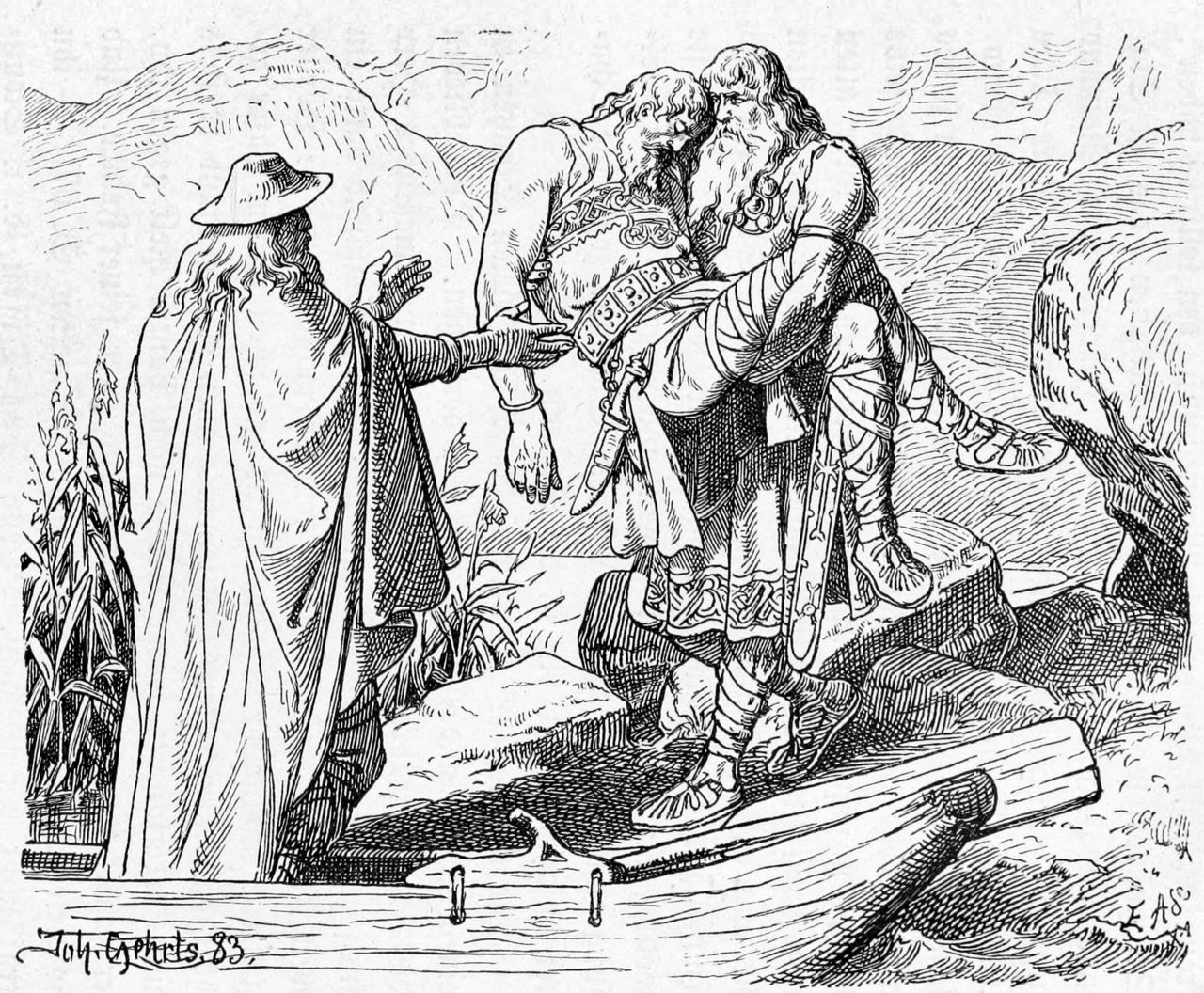
Sinfjötli is the eldest son of Sigmundr Frá dauða Sinfjötla, prose 1, and in the Eddas he is known mostly through insults. In both Helgi poems he acts as the spokesman of his half-brother Helgi's fleet, and trades abuse across the water with Guðmundr, son of Granmarr Helgakviða Hundingsbana I 34-46 Helgakviða Hundingsbana II 22-25. Helgi tells them both to stop and fight instead Helgakviða Hundingsbana I 47.
Guðmundr's insults point to a dark past. He accuses Sinfjötli of eating wolves' entrails, killing his brothers and lurking in rocky dens, and calls him the stepson of King Siggeir Helgakviða Hundingsbana I 38 Helgakviða Hundingsbana I 43. These lines only make sense against the story told in full in the later Völsunga saga. There Sinfjötli is born of Sigmundr and his sister Signý, Siggeir's wife, and runs as a wolf with his father before they burn Siggeir in his hall. The Eddas assume that story and do not tell it.
His death is told in the prose Frá dauða Sinfjötla. He killed the brother of his stepmother Borghildr over a woman, and at the funeral feast she brought him poisoned ale three times. Twice Sigmundr drank it for him. The third time Sinfjötli drank and died. Sigmundr carried the body to a fjord, where a man in a small boat took it aboard, sent Sigmundr round by land and vanished Frá dauða Sinfjötla, prose 1. The text does not name the ferryman. Readers have long taken him for Odin carrying the dead hero away, and that reading is an inference.
Snorri says Sinfjötli, like Sigurðr, was proof against venom on his skin but not within Skáldskaparmál 41.
In the sources
Quoted from the hosted translations; each line is checked against the text when the site is built. Select a reference to read it in context.
Muddy is the drink, Father!
Thou hast eaten the entrails of wolves, And of thy brothers the slayer been
Under houses the stepson of Siggeir lay, Fain of the wolf's cry out in the woods
Nine did we in Sogunes Of wolf-cubs have; I their father was.
Where the sources disagree or fall silent
- His mother is not named in the Eddas. Völsunga saga makes him the son of Sigmundr and Sigmundr's own sister Signý, which would explain 'stepson of Siggeir', but the poems only hint at this.
In modern culture
Not from the medieval sources.
As Fitela he appears in Beowulf, fighting beside his uncle Sigemund. The wolf-skin episode of Völsunga saga is often cited in modern discussions of Norse 'wolf-warriors'; how far it reflects real warrior customs is debated.