valkyrie
Sigrún
Valkyrie daughter of King Högni who chooses Helgi Hundingsbane over the man she was promised to, loses father and husband to the feud, and lies with Helgi in his grave-mound.
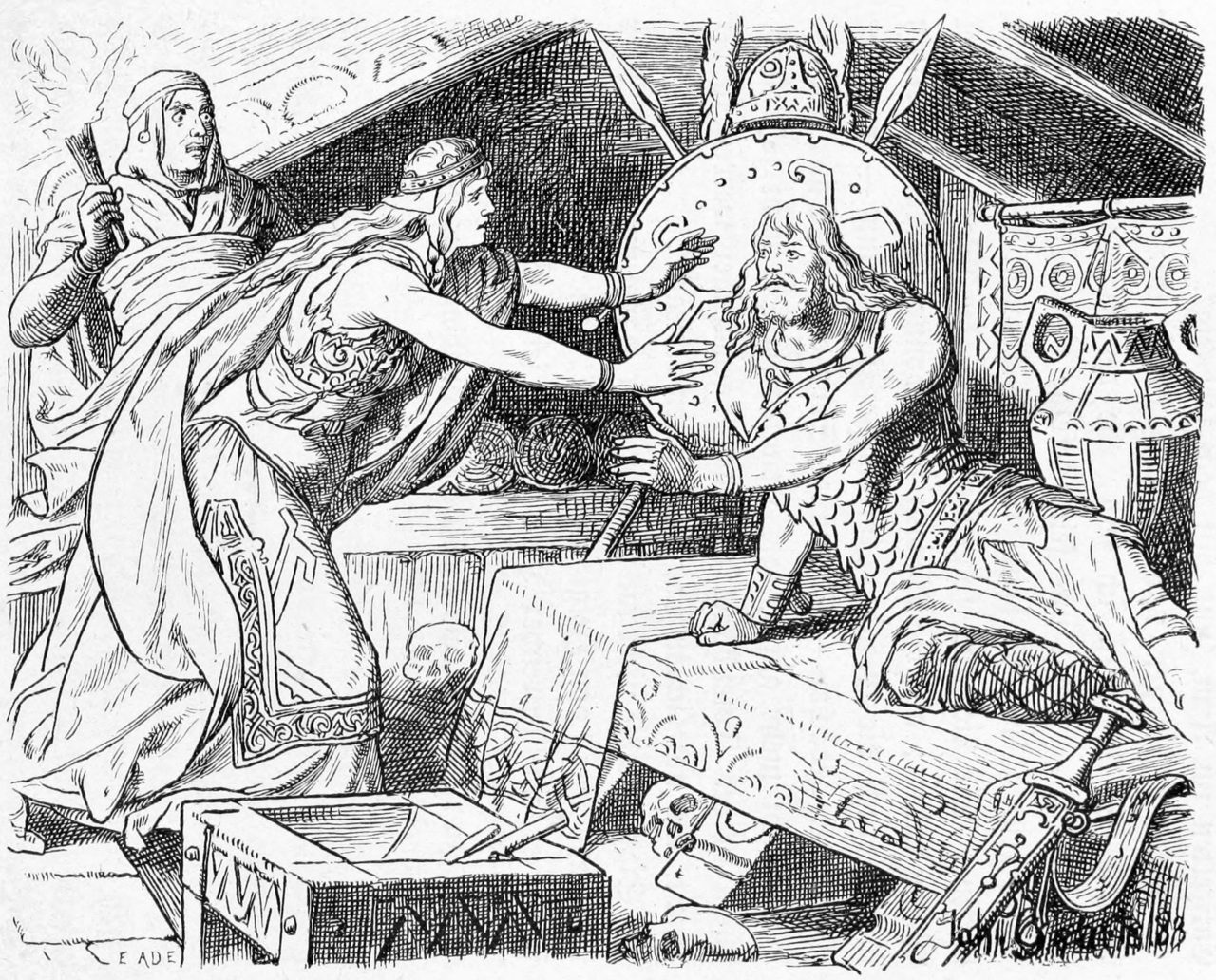
Sigrún is the valkyrie of the Helgi Hundingsbane poems. Her father is King Högni (not the Gjúkung of that name), and her brothers are Bragi and Dagr Helgakviða Hundingsbana II, prose 10. The prose calls her a valkyrie who "rode air and water", and says she was Sváva reborn Helgakviða Hundingsbana II, prose 6.
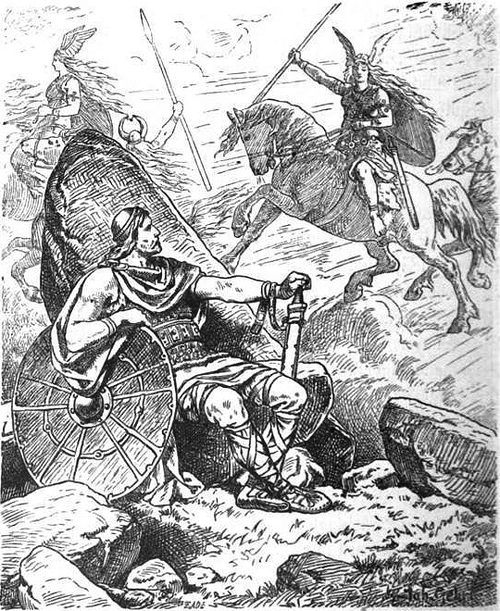
Promised by her father to Höðbroddr, whom she mocks as no finer a king than "the son of a cat", she rides to Helgi and asks him to fight for her Helgakviða Hundingsbana I 18-20. From the air she shields his fleet in a storm Helgakviða Hundingsbana I 31. After the battle she tells the dying Höðbroddr that she will never be his, and goes to Helgi full of joy, until he tells her that her father and brother lie among the dead Helgakviða Hundingsbana II 17-20. "To life would I call them who slaughtered lie, If safe on thy breast I might be," she answers Helgakviða Hundingsbana II 21.
When Dagr kills Helgi with Odin's spear, she curses him with a string of reversals: his ship will not sail, his horse will not run, his sword will not bite Helgakviða Hundingsbana II 29-31. Then a maid tells her that Helgi has ridden back to his mound. She goes in, kisses the cold dead king and sleeps in his arms Helgakviða Hundingsbana II 41-47. The next evening she waits at the mound in vain, and the maid warns her that the dead grow stronger at night Helgakviða Hundingsbana II 49-50. She dies soon after of grief Helgakviða Hundingsbana II, prose 21.
In the sources
Quoted from the hosted translations; each line is checked against the text when the site is built. Select a reference to read it in context.
Long with all my heart I loved Sigmund's son ere ever I saw him.
Now may every oath thee bite That with Helgi sworn thou hast
Here a bed I have made for thee, Helgi, To rest thee from care, thou kin of the Ylfings
Sigrun was early dead of sorrow and grief.
Where the sources disagree or fall silent
- The prose makes her the reborn Sváva of Helgakviða Hjörvarðssonar and says she was reborn again as Kára; the poems themselves do not say this.