concept
The völva
völva
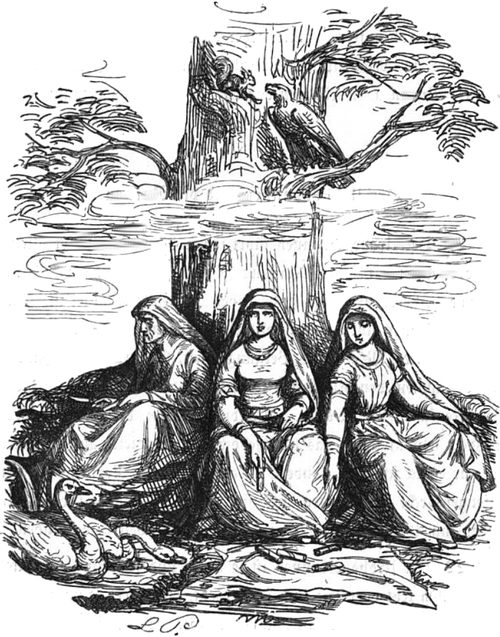
The Norse seeress: a woman who foretold the future, sometimes from beyond the grave. Völuspá, the first poem of the Poetic Edda, is a völva's prophecy spoken to Odin.
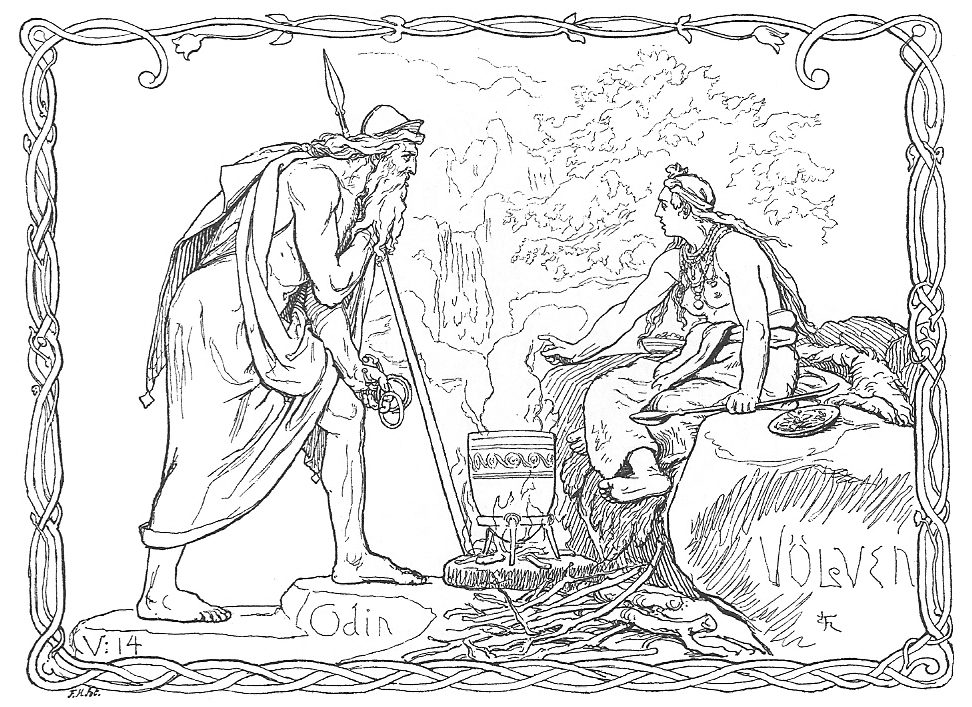
A völva is a seeress, a woman who can see what is hidden and what is to come. The Poetic Edda opens with the words of one. Völuspá means "the prophecy of the völva". In it she calls for silence from "Heimdall's sons, both high and low", tells Odin ("Valfather") that she will relate the oldest things she remembers Völuspá 1, and goes on from the creation of the world to its end and renewal.
The poem shows what a völva was for. Odin, the wisest of the gods, comes to her. "Alone I sat when the Old One sought me," she says, and she knows at once where his lost eye is hidden Völuspá 28. He pays her in "necklaces … and rings" Völuspá 30. Her refrain, "would you know yet more?" Völuspá 29, is half offer and half challenge. At the end she sinks away Völuspá 66. In the Old Norse she mostly speaks of herself in the third person ("she sat alone outside"); Bellows turns this into "I".
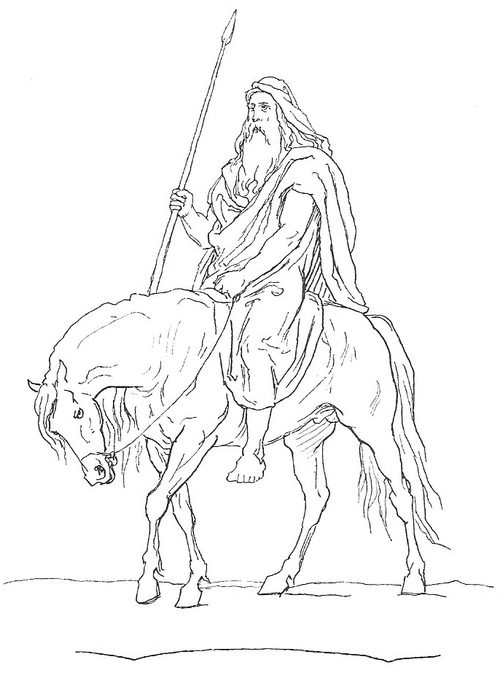
In Baldrs draumar, Odin rides to Hel to find out why Baldr is dreaming of death. At the eastern door he finds "the wise-woman's grave" and raises her with charms Baldrs draumar 4. She tells him, unwillingly, who will kill Baldr and who will avenge him, until she recognises him and sends him home Baldrs draumar 14. Odin's power to wake the dead with galdr meets the völva's knowledge.
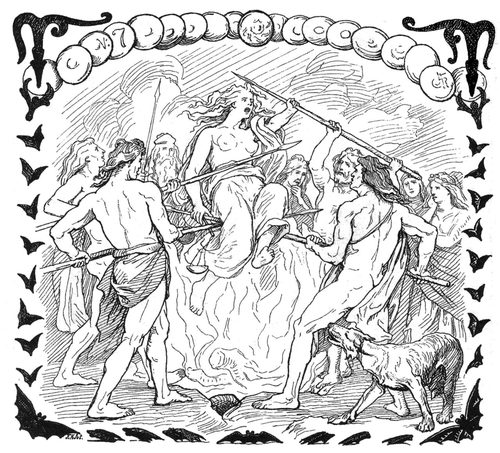
Völuspá also names a seeress called Heith, "the wide-seeing witch", who went from house to house; the Old Norse says she practised seiðr Völuspá 22. That stanza links the völva with seiðr, the sorcery the sagas associate with seeresses.
Outside the Eddas, the best-known description is in Eiríks saga rauða. A völva visits a Greenland farm in a hard season, sits on a raised seat, and after a woman present sings the chant she needs, foretells the end of the famine and a great future for the young woman who sang. Tacitus, writing about the Germanic peoples in the 1st century AD, already mentions women honoured as prophetesses. Archaeologists have suggested that some wealthy female burials of the Viking Age, buried with metal staffs, may be those of seeresses. That is an interpretation, not a certainty.
In the sources
Quoted from the hosted translations; each line is checked against the text when the site is built. Select a reference to read it in context.
Hearing I ask from the holy races, From Heimdall's sons, both high and low; Thou wilt, Valfather, that well I relate Old tales I remember of men long ago.
Alone I sat when the Old One sought me, The terror of gods, and gazed in mine eyes:
Necklaces had I and rings from Heerfather, Wise was my speech and my magic wisdom;
Then Othin rode to the eastern door, There, he knew well, was the wise-woman's grave; Magic he spoke and mighty charms, Till spell-bound she rose, and in death she spoke:
Heith they named her who sought their home, The wide-seeing witch, in magic wise;
Where the sources disagree or fall silent
- Whether the speaker of Völuspá is the same as Heith of stanza 22 or as the dead wise-woman of Baldrs draumar; readers have argued for both.